


Preventing Slips and Trips at Work: Practical Steps Every Workplace Can Take
- Apr 16
- 4 min read
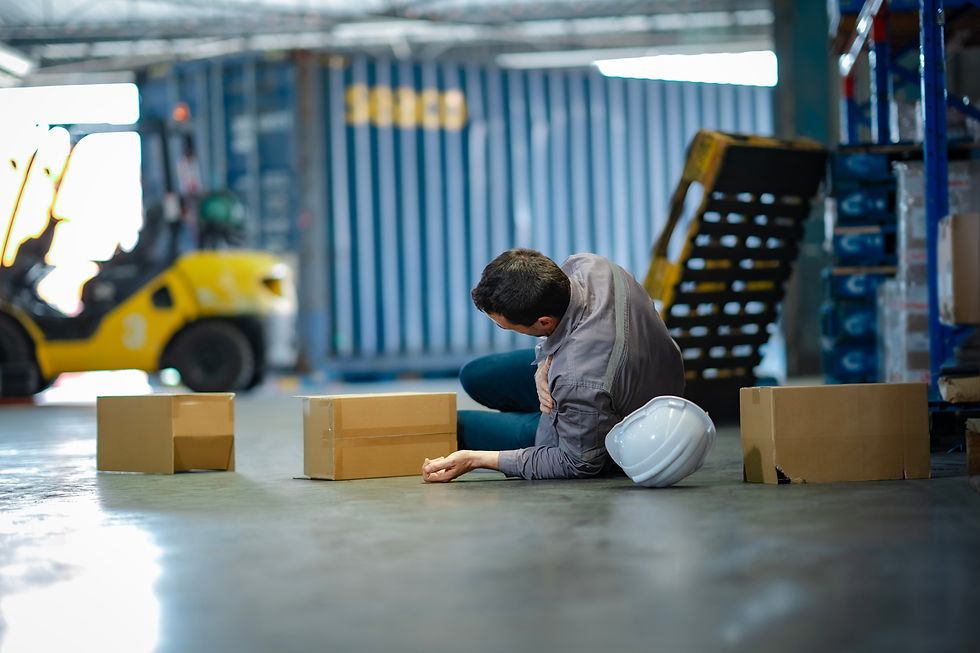
Slips and trips are one of those “small” workplace hazards that cause big problems. They’re the most common cause of injury at work, responsible for a significant proportion of reported major injuries — and they can trigger even more serious incidents, like falls from height.
The good news: preventing slips and trips usually isn’t complicated or expensive. It’s about spotting the real-world causes, putting sensible controls in place, and keeping on top of them.

Why slips and trips deserve attention
Slips and trips don’t just lead to bruises and embarrassment. They can cause fractures, head injuries, long-term absence, and knock-on operational disruption.
They’re also a major public-facing risk. If you have visitors, customers, or contractors on site, the same hazards apply — and you still have a duty to manage them.
What the law expects (in plain English)
UK health and safety law requires employers to take reasonably practicable steps to protect employees and anyone affected by their work.
In practice, that means:
• Assess the risk of slips and trips and take action where needed (risk assessment requirements).
• Keep floors suitable and in good condition, and make sure people can move around safely.
• Employees must cooperate, use any safety equipment provided, and avoid putting themselves or others at risk.
Start with a simple slips and trips risk assessment
A risk assessment isn’t about producing a mountain of paperwork. It’s about taking sensible steps to prevent harm.
A practical approach:
Identify where slips and trips could happen (entrances, wet areas, walkways, loading bays, stairs, temporary works areas).
Think through how accidents could occur and who could be harmed (employees, contractors, visitors).
Ask your team — they often spot issues managers miss.
Focus on the real risks (the ones most likely to cause harm).
Put controls into practice, then check they’re working.
Review regularly, because workplaces change.
If you have fewer than five employees, you don’t have to write it down — but keeping a record is still good practice.
Practical steps to prevent slips and trips
Here are straightforward, proven controls you can apply in most workplaces.
1) Stop floors becoming contaminated
Contamination is one of the biggest causes of slips — water, oil, dust, mud, or anything that changes the grip underfoot.
· Use entrance matting to reduce rainwater being tracked in.
· Fix leaks from machinery or buildings.
· Keep plant and equipment maintained.
· Design tasks to minimise spillages.
· Plan pedestrian and vehicle routes to avoid contaminated areas.
2) Use the right cleaning methods
Cleaning is essential — but done badly, it can create the hazard you’re trying to remove.
· Make sure your cleaning method fits the type of floor you have.
· Avoid creating extra risks while cleaning is happening.
· Leave smooth floors dry after cleaning, or exclude pedestrians until dry.
· Remove spillages promptly.
· Have clear arrangements for routine cleaning and spill response.
· Use the right detergent at the correct concentration.
3) Check flooring and the work environment
Sometimes the issue isn’t the spill — it’s the surface, lighting, or layout.
· Replace loose, damaged, or worn flooring.
· In wet/spill-prone areas, use flooring that doesn’t become unduly slippery.
· Ensure lighting is sufficient and that steps and slopes are clearly visible.
· Keep walkways and work areas clear of obstructions.
4) Get the right footwear
If floors can’t always be kept clean and dry, footwear can be a key control.
· Provide slip-resistant footwear where needed.
· Trial footwear first for comfort, fit, and suitability.
· If footwear is PPE, it must be supplied free of charge to employees.
5) Consider people and organisational factors
A surprising number of slips and trips happen because of how work is organised.
· Avoid rushing, overcrowding, and poor workflow.
· Manage trailing cables and temporary obstructions.
· Involve employees in decisions (for example, changes to cleaning methods or PPE selection).

What employees can do (and how to encourage it)
Prevention works best when everyone plays their part. Encourage employees to:
· Report accidents and near misses promptly.
· Deal with spillages (or get them dealt with) quickly.
· Report damaged floors or mats.
· Keep the workplace tidy.
· Remove trip hazards or make the area safe.
· Wear and look after PPE, and report faults.
· Speak up if something feels unsafe or if controls aren’t working.
Build it into your management system
The most effective workplaces treat slips and trips as part of everyday management — not a once-a-year checklist.
A good system helps you:
· Identify problem areas
· Decide what to do
· Act on decisions
· Check controls are working
· Improve continuously
Want more tools and guidance?
HSE provides additional resources that can help you go further, including:
· Slips and Trips eLearning Package (STEP)
· Hazard spotting checklist
· Slips and trips mapping tool
· Sector-specific guidance (eg catering)
If you need further guidence please have no hesitation reaching out to one of the team on 01782 438813 or email hello@youcandoit.training
Final takeaway
Slips and trips are common — but they’re also highly preventable.
If you:
· assess the real risks,
· keep floors and walkways in good condition,
· control contamination and cleaning,
· use suitable footwear where needed,
· and involve your team,
…you’ll reduce injuries, downtime, and the chance of a “minor” incident becoming a major one.

Comments