


Emergency First Aid at Work Course: The Essential Guide for UK Businesses in 2026
- 2 days ago
- 10 min read
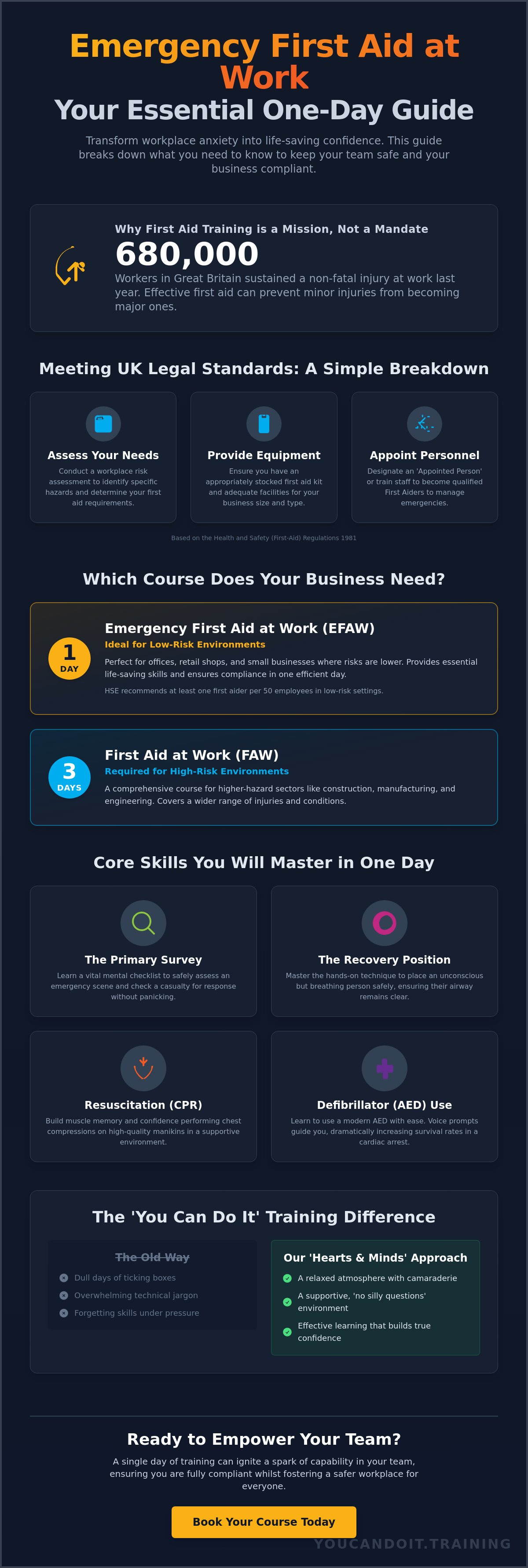
Did you know that 680,000 workers in Great Britain sustained a non-fatal injury at work last year? It is a sobering figure that turns a mandatory health and safety requirement into a vital mission for every UK business owner. You likely feel the weight of the Health and Safety (First-Aid) Regulations 1981, perhaps worrying whilst you wonder if your team would actually know how to act in a crisis or if they would simply freeze under pressure. It's completely natural to feel overwhelmed by technical jargon or the fear of "doing it wrong" when booking an emergency first aid at work course, but we believe that safety training should never be a source of stress or a dull day of ticking boxes.
This guide will show you how the right training can transform that anxiety into absolute confidence, empowering your staff with the right skills, the right mindset, and the right heart to save lives. We'll walk you through the essential 2026 updates to first aid kit standards and the latest HSE expectations; all whilst showing you how our unique approach focuses on a learning environment where technical excellence meets a relaxed atmosphere filled with camaraderie, fresh tea, and plenty of bourbon creams. By the end of this article, you'll understand how a single day of training can ignite a spark of capability in your team, ensuring you remain fully compliant whilst fostering a workplace where everyone feels truly looked after.
Key Takeaways
Understand how to navigate the Health and Safety (First-Aid) Regulations 1981 whilst ensuring your business remains fully compliant and ready for any situation.
Explore the essential curriculum of an emergency first aid at work course, including how to master the primary survey and life-saving recovery positions in just one day.
Learn the practical steps for conducting a workplace risk assessment to accurately identify the specific first aid requirements for your unique team and environment.
Discover how a "hearts and minds" approach to training replaces boring slides with active camaraderie, making the learning experience both memorable and effective.
Table of Contents
What is an Emergency First Aid at Work (EFAW) Course?
An emergency first aid at work course is a regulated, one-day qualification designed to bridge the gap between a medical emergency and the arrival of professional paramedics. It's a hands-on, practical experience that equips your team with the essential skills to preserve life when every second counts. We often hear from business owners who worry that their staff might find the technical aspects too daunting. Our "You Can Do It" philosophy is built on the belief that anyone can be a hero at work. You don't need a medical background to learn how to save a life; you just need a supportive environment, a clear head, and perhaps a good cup of tea to keep the nerves at bay.
This course is specifically tailored for lower-hazard environments. If you manage an office, a shop, or a small business, this one-day session provides the perfect balance of compliance and capability. To understand the foundation of these skills, it's useful to explore What is First Aid? in its simplest form: it is the immediate care provided to an injured or ill person to prevent their condition from worsening whilst waiting for professional help. It is about the right skills, the right mindset, and the right heart to act when it matters most.
The Legal Requirements for UK Workplaces
The Health and Safety (First-Aid) Regulations 1981 are the bedrock of workplace safety in the UK. These regulations state that every employer must provide adequate and appropriate first aid equipment, facilities, and people. To decide what "adequate" looks like for your business, you must carry out an Assessment of Needs. This involves looking at your workplace hazards, the number of employees, and how close you are to the nearest hospital. Even in the smallest businesses, you must have at least an Appointed Person to look after the first aid kit and take charge in an emergency. For many, having a staff member complete a formal qualification is the best way to ensure total peace of mind and full compliance.
EFAW vs. FAW: Which One Does Your Business Need?
The choice between the 1-day EFAW and the more comprehensive 3-day First Aid at Work (FAW) course usually comes down to your sector's risk level. Lower-hazard environments, such as typical offices or retail centres, are generally well-served by the 1-day emergency first aid at work course. If your business involves higher-hazard activities like construction, chemical manufacturing, or heavy engineering, the 3-day FAW course is the legal standard you'll likely need to meet. As a general rule of thumb for low-risk sites, you should aim for at least one qualified first aider for every 50 employees, ensuring that cover is always available even when someone is on holiday or off sick.
Core Curriculum: What You Will Master in One Day
Mastering the curriculum of an emergency first aid at work course isn't about memorising a dusty textbook. It's about building the muscle memory and mental grit to act when others might hesitate. We start with the Primary Survey, which is your vital mental checklist for assessing any scene safely. You'll learn to identify hidden dangers and check for a casualty's response without panicking. By following these clear, logical steps, you ensure that you are helping rather than becoming another casualty yourself. These standards are fully aligned with the HSE First Aid at Work Regulations, so you can be certain your training meets the highest UK benchmarks.
Once the scene is safe, we move into life-saving interventions. You'll get hands-on experience placing an unconscious person into the recovery position, ensuring their airway remains clear and they can breathe easily. We then dive into Resuscitation (CPR). It's a physical skill, but we make it accessible for everyone through practice on high-quality manikins. You'll also learn to use an Automated External Defibrillator (AED) with ease. Modern AEDs are remarkably clever; they provide voice prompts to guide you through every step. Having this confidence can increase survival rates significantly in a cardiac arrest. If you're ready to empower your team with these skills, you might want to explore our upcoming course dates to see how we bring this curriculum to life.
Managing Life-Threatening Emergencies
We tackle the high-stakes moments that keep managers awake at night. You'll learn the specific techniques for helping a choking adult, from back blows to abdominal thrusts. We also cover how to control severe external bleeding using direct pressure and modern dressings. Finally, we look at shock. It's often called the "quiet killer" because its symptoms can be subtle, but you'll leave knowing exactly how to recognise and treat it before it becomes critical.
Treating Common Workplace Minor Injuries
Not every incident is a life-or-death crisis. Most days involve small cuts, grazes, or minor scalds from a kettle in the staff room. We'll show you how to treat these professionally to prevent infection. You'll also get to know the contents of a standard first aid kit, updated to the BS 8599-1:2019+A1:2026 standard. We'll explain why things like specialist burns kits and eyewash are essential, and more importantly, exactly how to use every item in your kit effectively during a busy shift.
How to Organise Your Workplace First Aid Training
Organising an emergency first aid at work course shouldn't feel like a logistical mountain to climb. It starts with a steady, logical look at your workplace via a risk assessment. You need to determine how many staff require training based on your specific hazards and headcount. Once you have your numbers, the next step is choosing a partner who balances rigorous accreditation with a person-centred approach. You want the right training, for the right people, at the right price. Scheduling is equally vital; aim for a date that minimises project disruption whilst ensuring your nominees can attend without distraction. Finally, keep a clear record of certification expiry dates. Remember that an EFAW certificate is valid for three years, so set a reminder for thirty months' time to stay ahead of the curve and ensure your team is never without cover.
Selecting the Right Nominees
When choosing your first aiders, look for individuals who are reliable, calm under pressure, and possess great communication skills. We always suggest that volunteering is far better than "voluntelling" for these roles. A person who wants to be there will engage more deeply with the "hearts and minds" philosophy of the training. Consider your shift patterns and staff locations carefully; there is little use in having three first aiders if they all work the same Tuesday morning shift whilst the night crew is left without cover. You need a safety net that spans your entire operational footprint.
Preparing for the Training Day
To get the most out of the day, advise your team to wear comfortable, practical clothing. There will be plenty of floor-based practice for CPR and the recovery position, so trousers and flat shoes are a must. It's also worth addressing any "doing it wrong" anxieties early on by reassuring staff that our learning environment is relaxed, supportive, and designed for their comfort. We believe that when people feel at ease, with a steady supply of tea, coffee, and bourbon creams, they retain life-saving skills much more effectively. If you are ready to transform your team's confidence, book your emergency first aid at work course today and let us help you soar through your compliance requirements with ease.
The Learning Experience: A Hearts and Minds Approach
We believe that training should be a transformative opportunity rather than a mandatory chore. A truly effective emergency first aid at work course moves far beyond "death by PowerPoint" by placing the learner at the heart of everything we do. The atmosphere matters because a clinical, cold classroom often leads to information overload where vital skills are forgotten as soon as the door closes. Instead, we foster a sense of camaraderie amongst staff, igniting sparks of confidence through active participation and shared achievement. When your team learns together in an environment that values human connection, they don't just learn how to bandage a wound; they build a safer workplace culture where everyone feels empowered to look out for one another.
The role of the trainer is vital in this journey. Our instructors act as knowledgeable mentors who treat every student as a peer, ensuring that the day is both professional and approachable. By dismantling the intimidation often associated with technical safety compliance, we help our learners soar. This person-centred approach ensures that when the training ends, your staff don't just have a certificate; they have the genuine interest and capability to act as a supportive, reliable partner in your business safety strategy.
Overcoming the Fear of Acting
One of the biggest hurdles in any crisis is bystander apathy, that moment of hesitation where people wait for someone else to take the lead. We teach specific techniques for managing the natural adrenaline rush that occurs during an accident, helping your team to stay grounded whilst they act. Immersive, hands-on simulations allow your team to build the essential muscle memory required to act decisively when a real emergency strikes. Our "You Can Do It" mantra is a recurring theme of accessibility, reminding every learner that they are fully capable of making a difference, regardless of their previous experience or background.
Why Hospitality is Part of the Training
There is actual science behind our focus on comfort. We know that a warm welcome, a steady supply of tea and coffee, and those "leagues ahead" Bourbon creams help to reduce stress and improve focus. When a learner feels hospitable and at ease, their brain is much more receptive to new information, allowing them to absorb technical details without feeling overwhelmed. We pride ourselves on a "relaxed but professional" environment where no question is a silly one and every student feels heard. Ready to ignite the spark of safety in your team? Book your Emergency First Aid at Work course with us today.
Ignite a Culture of Safety and Confidence Today
You now have a clear roadmap to move from regulatory confusion to workplace confidence. By mastering the core curriculum of an emergency first aid at work course, you ensure your team is equipped to handle everything from minor burns to life-critical cardiac arrests with a steady hand. Compliance with the Health and Safety (First-Aid) Regulations 1981 isn't just about ticking a box; it's about fostering a genuine sense of camaraderie and mutual care amongst your staff.
With our 99% pass rate across our safety programmes and full accreditation from leading industry bodies, we provide the expertise you need with the personal touch you deserve. Our "Hearts and Minds" approach turns a standard classroom day into a transformative experience where technical excellence meets a warm, relaxed atmosphere. We put your learners at the heart of everything, giving them the support they need to soar. It's time to replace the fear of "doing it wrong" with the pride of knowing your team can act when it matters most.
Empower your team with our accredited Emergency First Aid at Work course
Frequently Asked Questions
How long does an Emergency First Aid at Work certificate last?
An EFAW certificate is valid for exactly three years from the date of your assessment. After this period, you'll need to attend another full one-day session to renew your qualification and maintain your status as a recognised first aider. We suggest marking your calendar for thirty months after your course so you can organise your next training date before the current one expires.
Is there a formal exam at the end of the EFAW course?
There isn't a stressful, sit-down written exam at the end of the day. Instead, your trainer uses continuous assessment to ensure you've mastered the practical skills, such as performing CPR and using an AED. This supportive approach removes the fear of "doing it wrong" and focuses on building your genuine confidence through hands-on practice in our relaxed learning environment.
Can I do the Emergency First Aid at Work course online?
You cannot complete a fully regulated EFAW qualification entirely online because the HSE requires a face-to-face practical assessment. Whilst some theory can be studied digitally, the life-saving nature of an emergency first aid at work course means you must physically practice techniques like chest compressions on a manikin. Being in the room with a mentor allows for immediate feedback and much deeper learning.
How many first aiders does my business legally need?
The number of first aiders you require depends on your specific workplace risk assessment according to HSE guidelines. For lower-hazard environments like a typical office with fewer than 50 employees, you must have at least one "Appointed Person" to take charge. If you have more than 50 staff, the general guideline is to have at least one EFAW-trained person for every 50 workers on-site at any one time.
What is the difference between EFAW and a standard First Aid at Work course?
The primary difference is the depth of training and the time spent in the classroom. The EFAW is a one-day session focused on life-threatening emergencies, whereas the full First Aid at Work (FAW) course takes three days and covers a wider range of medical conditions and complex injuries. Choose the one-day emergency first aid at work course if you operate in a lower-risk sector like retail or professional services.
Do I need to refresh my first aid skills every year?
Whilst your formal certificate is valid for three years, the HSE strongly recommends that first aiders attend a half-day annual refresher session. Skills like CPR can fade quickly if they aren't used, and a quick yearly update helps keep your confidence high and your muscle memory sharp. It's a fantastic way to maintain camaraderie and ensure your team remains ready to act decisively during a real crisis.


Comments