


Abrasive Wheels Training: The Ultimate Guide to Workplace Safety and Compliance 2026
- 1 hour ago
- 13 min read
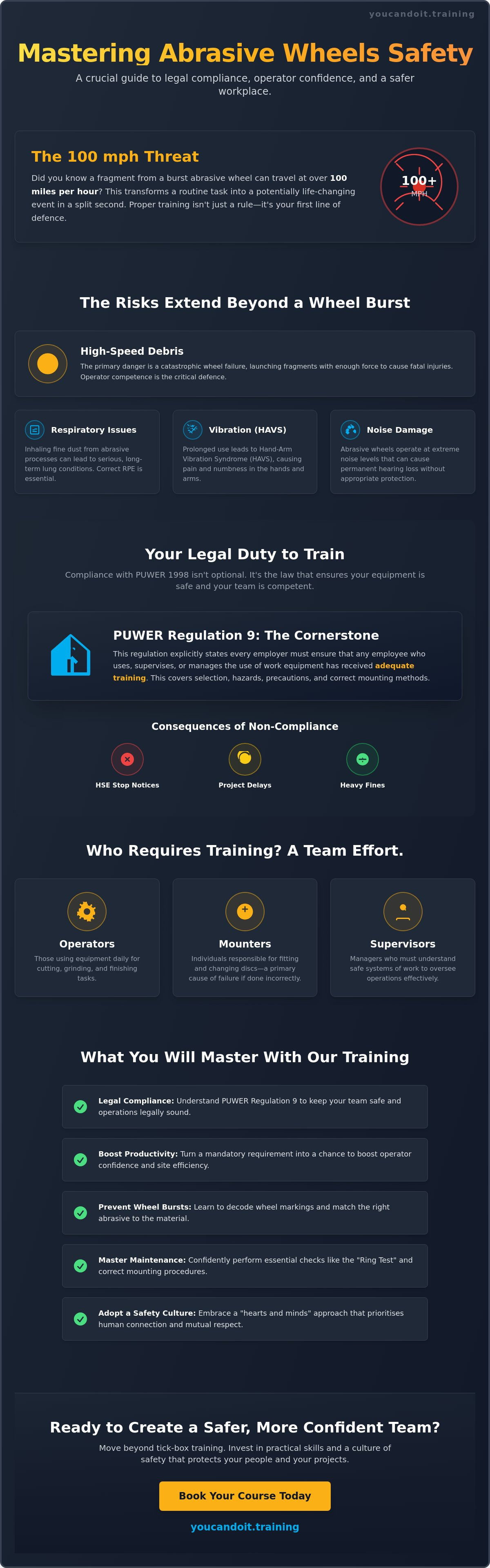
Did you know that a fragment from a burst abrasive wheel can travel at over 100 mph, essentially turning a routine workshop task into a life-changing event in a split second? It's a sobering thought that weighs heavily on every site manager and operator who values the safety of their team above all else. You likely feel the constant pressure of keeping up with PUWER regulations, and perhaps you're tired of those dry, "tick-box" sessions that fail to truly engage the hearts and minds of your staff. We understand that the fear of accidents and the confusion surrounding HSG17 can be daunting, but we're here to show you that technical safety is something you can definitely master.
This guide will help you master the essentials of abrasive wheels training, ensuring you understand your legal obligations whilst discovering how professional instruction protects your people and boosts productivity. We'll explore the latest 2026 standards, practical tips to prevent wheel bursts, and the simple steps you can take to achieve full legal compliance. By the time we're finished, you'll see how the right training creates confident operators and a workplace where everyone feels supported, respected, and ready to soar.
Key Takeaways
Understand how PUWER Regulation 9 mandates adequate training to ensure your team stays safe and legally compliant.
Discover how professional abrasive wheels training transforms a mandatory safety requirement into an opportunity to boost site productivity and operator confidence.
Learn to decode complex wheel markings and match the right abrasive to the specific material to prevent dangerous wheel bursts.
Master essential maintenance checks like the "Ring Test" and correct mounting procedures to protect your team from high-speed debris.
Explore a "hearts and minds" approach to safety that prioritises human connection and mutual respect in every learning environment.
Table of Contents
What is Abrasive Wheels Training and Why is it Essential?
Abrasive wheels are the tireless workhorses of British industry, found in almost every metal fabrication workshop, construction site, and garage across the country. Essentially, an abrasive wheel is a grinding wheel or cutting disc made of abrasive particles bonded together, designed to wear away material through intense friction. Whether you're using a handheld angle grinder, a stationary bench grinder, or a powerful petrol-driven cut-off saw, these tools are indispensable for cutting, grinding, and polishing hard materials. However, their incredible power comes with a significant responsibility. Because they operate at such high speeds, they can be amongst the most dangerous pieces of equipment in any workplace if they aren't handled with the right knowledge and respect.
Our abrasive wheels training isn't just about handing over a certificate to satisfy a site manager or tick a box on a compliance form. It's about igniting a genuine passion for safety that transforms a mandatory chore into a real opportunity for professional growth and site momentum. We want to move away from the cold, clinical instruction of the past and instead foster an environment where camaraderie and mutual respect lead to true competence. When you understand the "why" behind the safety checks, you're not just following a rule; you're protecting yourself and your mates. We believe that with the right support, you can do it.
The Real Risks: Beyond the Wheel Burst
Most people immediately think of a wheel "exploding" when they consider the dangers, and for good reason. As we've mentioned, fragments can fly off at speeds exceeding 100 mph, which is why operator competence is your absolute first line of defence against a life-changing injury. But the risks don't stop at physical impact. Using these tools incorrectly can lead to long-term health issues, including respiratory problems from inhaling fine dust, or Hand-Arm Vibration Syndrome (HAVS) from prolonged exposure to vibration. Noise levels are another factor that can't be ignored. A truly safe operator looks at the whole picture, ensuring every risk is managed so everyone can go home safe at the end of the shift.
Who Needs This Training?
It's a common misconception that only the person holding the grinder needs to be trained. Under UK law, anyone who handles, mounts, or operates these tools must receive adequate instruction. This includes the following roles:
Operators: Those using the equipment daily for cutting or grinding tasks.
Mounters: The individuals responsible for changing the discs, as incorrect mounting is a primary cause of accidents.
Supervisors: Managers who need to understand safe systems of work to oversee operations effectively.
Safety is a shared journey. We aim to engage the hearts and minds of every person in the room, ensuring that the apprentice and the veteran site manager alike feel confident and capable. It's about fostering a culture where everyone looks out for one another whilst enjoying a relaxed atmosphere and perhaps a bourbon cream during the break.
Understanding the Legal Framework: PUWER and HSG17
Legal compliance can sometimes feel like a mountain to climb, but it doesn't have to be an intimidating journey. The primary legislation governing your workshop equipment is the Provision and Use of Work Equipment Regulations 1998, or PUWER for short. These regulations ensure that all work equipment is suitable for its intended use, regularly maintained, and operated only by those who know exactly what they're doing. When we talk about abrasive wheels training, we're focusing on a legal necessity that keeps your projects moving and your people protected. Ignoring these rules doesn't just lead to paperwork headaches; it can result in HSE stop notices, heavy fines, and significant project delays that can stall your business momentum.
We believe that safety should be accessible and empowering. By understanding the legal framework, you're not just avoiding a penalty; you're fostering a culture of excellence. It's about having the right knowledge, for the right task, at the right time. If you want to ensure your team is fully prepared, we can help you find the right training for your specific site needs in a way that truly engages your staff.
PUWER Regulation 9: Your Legal Duty
Regulation 9 is the cornerstone of workplace safety training. It explicitly states that every employer must ensure that all persons who use work equipment have received "adequate training" for purposes of health and safety. This includes training in the methods which may be adopted when using the equipment and any risks which such use may entail. Professional certification provides the essential paper trail required for safety audits, proving that you've fulfilled your duty of care. To support your site compliance with independent assessment and verification, you can check out International Associates Limited. Refresher training is also vital. Best practice suggests a refresh every three years to ensure that safety standards remain high and that no one becomes complacent with the tools they use every day.
HSG17: The Industry Standard for Safety
Whilst PUWER provides the legal "what," the HSE document HSG17 provides the practical "how." This guidance is the industry bible for anyone working with abrasive wheels. It details the essential marking system used to identify wheel types, including colour coding and maximum operating speed ratings. You must always ensure the wheel's speed rating exceeds the spindle speed of the machine. HSG17 also introduces the concept of "shelf life" for wheels. Most organic bonded wheels have an expiry date marked on the hub, usually three years from the date of manufacture. Using a wheel past its expiry date is a serious risk. While we focus on British standards, international regulations like OSHA 1910.215 reinforce these same global principles regarding machine guarding and safe mounting practices, proving that safety is a universal language.
Identifying Risks and Selecting the Right Wheel
Selecting the right tool for the job is where true craftsmanship begins. It shouldn't feel like you're trying to crack a secret code when you look at the markings on a new disc. Instead, we want to help you move from confusion to confidence, igniting a sense of mastery over the equipment you use every day. When we talk about abrasive wheels training, a huge part of the journey is learning to read the "DNA" of the wheel. Those letters and numbers stamped on the centre aren't just for show; they tell you the abrasive type, the grain size, the grade, and the bond type. For instance, seeing an 'A' tells you it's Aluminium Oxide, perfect for steel, whilst a 'C' indicates Silicon Carbide, which is your go-to for masonry and cast iron.
Matching the wheel to the material is vital for both safety and project momentum. If you use a wheel designed for steel on a soft material like aluminium, the wheel can "load" or become clogged, leading to overheating and potential failure. Speed ratings are equally critical. You must always ensure the wheel’s maximum operating speed exceeds the machine’s spindle speed. A mismatch here is a recipe for a burst. While we primarily focus on UK standards, the OSHA Abrasive Wheel Regulations provide a similar global perspective on the absolute necessity of matching wheel strength and guarding to the specific task at hand. It's about having the right tool, for the right job, every single time.
The Anatomy of an Abrasive Wheel
At its heart, an abrasive wheel is a combination of "teeth" (the grit) and "glue" (the bond). The bond holds the abrasive grains in place until they become blunt, at which point they should break away to reveal fresh, sharp grains. If the bond is too hard for the material, the wheel will glaze over and stop cutting. If it's too soft, the wheel will wear down far too quickly. Understanding this balance is what keeps your work efficient and your environment safe. Always ensure the wheel’s maximum operating speed exceeds the machine’s spindle speed.
Environmental Hazards: Dust, Noise, and Vibration
Safety isn't just about the immediate danger of a burst; it's about fostering long-term health and well-being amongst your team. Hand-Arm Vibration Syndrome (HAVS) is a real concern that we manage through proper tool selection and limiting trigger time. We also need to consider the air we breathe. Using effective dust extraction and the correct Respiratory Protective Equipment (RPE) ensures that no one is left with long-term lung issues. By organising your workspace to minimise noise, you show a genuine interest in the comfort and respect of everyone on site. It's this "hearts and minds" approach that turns a standard site into a place where people can truly soar.
Best Practices for Operation, Inspection, and Maintenance
Once you've mastered the art of selecting the correct wheel, the focus shifts to the hands-on care and maintenance that keeps your site running smoothly. This stage of abrasive wheels training is where we move from theory to the practical, everyday habits that define a true professional. It's about respecting the tool enough to check it every single time you pick it up. We foster an environment where asking a question about a suspicious-looking disc is encouraged, not mocked. If you're ready to get hands-on with your team's safety, you can book your abrasive wheels training here to ensure everyone is up to speed.
One of the most vital checks for vitrified wheels is the "Ring Test". By suspending the wheel and tapping it gently with a non-metallic object, you're listening for a clear, bell-like ring. A dull thud is a warning sign of an internal crack that could lead to a catastrophic burst. Beyond inspection, storage is key. Wheels should be kept in a dry, temperature-controlled centre, away from the damp and extreme cold that can cause the bonding material to degrade over time. Finally, remember that PPE like high-impact eye protection and ear defenders are your final barrier. They don't replace safe practice, but they are essential for your long-term health and well-being.
Pre-Use Inspection Checklist
Before you even think about flicking the switch, a visual inspection is mandatory. Look for any visible chips, cracks, or signs of dampness amongst your stock. Ensure the machine guard is positioned correctly to deflect sparks and debris away from your body. We always recommend the "one-minute run". After mounting a new wheel, start the machine in a protected area and let it run for sixty seconds whilst standing to one side. If there's a flaw in the wheel, it's much better for it to fail during this test than when you're in the middle of a cut.
Safe Mounting and Adjustment
Mounting a wheel requires a steady hand and a clear head. First, always isolate the power source; pull the plug or remove the battery so there's zero chance of accidental startup. Verify that the wheel's speed rating is higher than the machine's RPM, then ensure you're using the correct blotters and flanges. These components distribute the clamping pressure evenly and prevent the wheel from slipping. Use the proper spanners or keys provided by the manufacturer. Avoid the temptation to over-tighten the nut, as this can crush the wheel's structure and create the very cracks we're trying to avoid.
The "You Can Do It" Approach to Safety Training
We've spent time looking at the technicalities of PUWER and the physical mechanics of the "Ring Test," but we know that real safety happens between the ears and in the heart. Our abrasive wheels training isn't designed to be a dry, slide-heavy lecture that leaves you checking your watch. We put the learner at the heart of the safety curriculum, fostering an atmosphere of camaraderie and mutual respect from the moment you walk through the door. It's about moving away from the "us and them" mentality of traditional compliance and instead building a community of safe, skilled professionals who look out for one another on site.
Our "Hearts and Minds" philosophy is specifically designed to create lasting behavioural change. We don't just tell you what the rules are; we help you understand why they matter to your family, your colleagues, and your future. This emotional connection is what makes the knowledge stick long after the course is over. When you feel empowered rather than intimidated, you're more likely to spot risks and speak up when something doesn't feel right. It's this shift in perspective that allows a business to truly soar, turning safety from a mandatory chore into a collective achievement.
We also know that you can't learn effectively if you're hungry, uncomfortable, or bored. That's why we place such high value on the physical and psychological learning environment. You'll find a warm welcome, plenty of fresh tea and coffee, and a selection of bourbon creams that are, quite frankly, leagues ahead of the usual training room fare. This relaxed, hospitable British culture is a signature of our service. It signals that we value your comfort as much as your curriculum, creating a space where everyone feels they can genuinely say, "I can do it."
Expert Mentors, Not Just Instructors
With over thirty years of experience in providing accredited health and safety training, we've seen it all. Our mentors aren't just reading from a script; they are peers who have stood where you stand and understand the daily pressures of a busy site. This deep industry knowledge and our student-centric method are why we maintain a 99% pass rate. We take a personalised approach to every session, ensuring that technical compliance feels achievable for everyone. We have a genuine interest in your specific project needs, making the training relevant to the actual work you do every day.
Ready to Ignite Your Safety Potential?
Are you ready to ignite your safety potential? We believe that every operator has the spark of excellence within them, and our goal is to help that talent shine. By choosing a training partner that prioritises human connection and mutual respect, you're investing in more than just a certificate; you're building a safer, more productive future for your entire team. Take the next step in your professional journey and discover how our "hearts and minds" approach can help your business soar. Book your Abrasive Wheels Training with the experts today! and join the thousands of professionals who have found confidence through our supportive, expert-led courses.
Ready to Transform Your Workplace Safety?
Looking back at the technical requirements and inspection routines we've discussed, it's clear that safety is about more than just avoiding a fine. It's about the peace of mind that comes from knowing your team is protected by the highest standards of abrasive wheels training. By moving beyond a simple "tick-box" exercise, you're choosing to foster a culture where every operator feels confident, capable, and truly respected. This investment in your people ensures that your projects keep moving forward without the fear of avoidable delays or injuries.
As a Chartered member of IOSH and a CITB accredited partner, You Can Do It Training Ltd brings over thirty years of experience to every session. Our 99% pass rate reflects our student-centric method, and our "hearts and minds" approach ensures that safety becomes a way of life rather than a chore. We provide a relaxed, welcoming environment where the tea is hot and the bourbon creams are always plentiful. If you're ready to see your team soar, Book your Abrasive Wheels Training with You Can Do It Training Ltd today. You have the potential to lead the way in safety, and we're here to show you that you can do it.
Frequently Asked Questions
Is abrasive wheels training a legal requirement in the UK?
Yes, it's a strict legal requirement under the Provision and Use of Work Equipment Regulations 1998 (PUWER). Regulation 9 specifically mandates that all employees who use, mount, or oversee the use of work equipment must receive adequate training. Failing to provide this can lead to HSE intervention, heavy fines, or even criminal prosecution if an accident occurs on your site.
How long does an abrasive wheels certificate last?
While there's no legally defined expiry date for a certificate, industry best practice is to refresh your abrasive wheels training every three years. This ensures that operators don't become complacent and stay updated on the latest safety standards. You should also consider refresher training if new equipment is introduced or if you notice unsafe working habits amongst your team.
What is the "Ring Test" for abrasive wheels?
The Ring Test is a vital manual check used to detect internal cracks in vitrified wheels before they are mounted. You suspend the wheel through its centre hole and tap it gently with a non-metallic object, such as a screwdriver handle. A sound, crack-free wheel will produce a clear, bell-like ring, whilst a damaged wheel will emit a dull thud, indicating it must be destroyed immediately.
Can I use an angle grinder without specific training?
No, you should never use an angle grinder without proper instruction, as it's ranked by RoSPA as the third most dangerous tool in the UK. With over 5,000 accidents involving angle grinders reported each year, the risks of wheel bursts or kickbacks are simply too high to ignore. Proper training ensures you understand how to handle the tool safely and choose the correct disc for the task.
What PPE is required when using abrasive wheels?
Essential PPE includes high-impact eye protection (Grade 1 goggles or a full face shield), ear defenders, and gloves. You must also consider Respiratory Protective Equipment (RPE) to protect against fine dust, and safety boots with steel toe caps are standard. Remember that PPE is your final line of defence; it works best alongside the "hearts and minds" safety culture we foster in our courses.
What does HSG17 stand for and why is it important?
HSG17 stands for "Health and Safety Guidance 17," which is the HSE's official guide titled "Safety in the use of abrasive wheels." It's the primary source of truth for complying with PUWER 98 in relation to these tools. It covers everything from technical marking systems to the correct methods for mounting and storing wheels to prevent degradation.
How often should abrasive wheels be inspected?
Abrasive wheels must be visually inspected every single time before they are used. You're looking for chips, cracks, or signs of dampness that could weaken the bond. Additionally, when a new wheel is first mounted, it should undergo a "one-minute run" in a protected area to ensure it's balanced and structurally sound before you start work.
What happens if I use a wheel with a lower RPM rating than the tool?
Using a wheel with a lower RPM rating than the tool's spindle speed is incredibly dangerous and likely to cause the wheel to disintegrate. The centrifugal force will exceed the wheel's strength, causing it to explode into fragments that can travel at over 100mph. Always ensure the wheel's maximum operating speed is higher than the machine's maximum speed to stay safe.